VIDEO POKER ANYONE?
Ever since the Riverboat Gambling Act was established in 1990, Illinois slot machines and other forms of gambling have grown rapidly across the state, now with more than ten active casinos.Nearly 20 years later in 2009, the Video Gaming Act was enacted, allowing licensed establishments such as bars, restaurants, truck stops, and veteran locations to place up to five Illinois slot machines in.
Cost To Open A Slot Machine Business In Illinois Today
Applying for A Video Gaming License Under Illinois’ New Video Gaming Act
Author: James Rowe, Partner
The Law Firm of Rowe & Associates
If you are interested in applying for permission to operate a video gaming terminal (“VGT'), such as video poker machines, at your establishment or place of business in Illinois, this guide will prove helpful to answering some of your likely questions. However, each person’s situation is different, and the law complicated. Therefore, I encourage you to call The Law Firm of Rowe & Associates to further discuss the licensing requirements and application process with us.
Here are some sample Qs&As relating to the Gaming Act:
Q: Where will video gaming be allowed?
A: In licensed retail establishments where alcoholic liquor is drawn, poured, mixed, or otherwise served for consumption on the premises, licensed truck stops, and licensed fraternal and veterans establishments.
Video gaming is restricted from the following locations:
§ 1,000 feet of a facility operated by an organization licensee, inter-track wagering licensee, or inter-track wagering location licensee licensed under the Illinois Horse Racing Act of 1975 (230 ILCS 5/1 et seq. (West 2008)) (the Board may waive this restriction in certain circumstances);
§ 1,000 feet of the home dock of a riverboat licensed under the Riverboat Gambling Act (230 ILCS 10/1 et seq. (West 2008)) (the Board may waive this restriction in certain circumstances); or
§ 100 feet of either a school or a place of worship under the Religious Corporation Act (805 ILCS 110/0.01 et seq. (West 2008)).
Additionally, the Board must consider whether a video gaming terminal ownership would result in “undue economic concentration'.
Q: Is a license required to place a video gaming terminal in your establishment?
A: Yes. Those found without a proper license are subject to penalties.
Among the requirements for licensure:
(a) Burden is upon applicant. The burden is upon each applicant to demonstrate suitability for licensure. Each VGT manufacturer, distributor, supplier, operator, handler, and licensed establishment shall be licensed by the Board. The Board may issue or deny a license under this Act to any person under the same criteria set forth in Section 9 of the Riverboat Gambling Act (230 ILCS 10/9 (West 2008)).
(b) Background investigations. Each person seeking and possessing a license as VGT manufacturer, distributor, supplier, operator, handler, and licensed establishment shall submit to a background investigation conducted by the Board with the assistance of the State Police or other law enforcement. This investigation shall include each trust beneficiary, partnership partner, director, officer and member of the entity being investigated, as well as all stockholders of 5% or more in a parent or subsidiary corporation.
(c) Disclosure of financial interests. Each person seeking and possessing a license as a VGT manufacturer, distributor, supplier, operator, handler, and licensed establishment shall disclose the identity of every person, association, trust, corporation or limited liability company having a direct or indirect interest of more than 1% in the VGT operation for which the license is sought. If the disclosed entity is a trust, the application shall disclose the names and addresses of the beneficiaries; if a corporation, the names and addresses of all stockholders and directors; if a partnership, the names and addresses of all partners, both general and limited; if a limited liability company, the names and addresses of all members.
(d) License disqualifications. No person may receive a license under the Act if found by the Board to:
(1) Have been convicted of any violation of Article 28 of the Criminal Code of 1961; and/or
(2) Have a background (including a criminal record, reputation, habits, social or business associations, or prior activities) that poses a threat to the public interests of the State or to the security and integrity of video gaming; and/or
(3) Create or enhance the dangers of unsuitable, unfair, or illegal practices, methods, and activities in the conduct of video gaming; and/or
(4) Present questionable business practices and financial arrangements incidental to the conduct of video gaming activities.
(e) License application fees (fees charged by the State for applying):
Manufacturer
$5,000
Distributor
$5,000
Terminal operator
$5,000
Supplier
$2,500
Technician
$100

Terminal handler
$50
If you need assistance in navigating the waters of the application process for an Illinois gaming license, contact my Firm.
-------------------------------------------------------------------------
Rate this guide
About the author
The gaming industry is big business in the US, contributing an estimated $240 billion to the economy each year while generating $38 billion in tax revenues and supporting 17 million jobs.
What people may not realize is that slot machines, video poker machines, and other electronic gaming devices make up the bulk of all that economic activity. At casinos in Iowa and South Dakota, for example, such devices have contributed up to 89 percent of annual gaming revenue.
Spinning-reel slots, in particular, are profit juggernauts for most casinos, outperforming table games like blackjack, video poker machines, and other forms of gambling.
What about slot machines makes them such reliable money makers? In part, it has something to do with casinos’ ability to hide their true price from even the savviest of gamblers.
The Price of a Slot
An important economic theory holds that when the price of something goes up, demand for it tends to fall.
But that depends on price transparency, which exists for most of the day-to-day purchases we make. That is, other than visits to the doctor’s office and possibly the auto mechanic, we know the price of most products and services before we decide to pay for them.
Slots may be even worse than the doctor’s office, in that most of us will never know the true price of our wagers. Which means the law of supply and demand breaks down.
Casino operators usually think of price in terms of what is known as the average or expected house advantage on each bet placed by players. Basically, it’s the long-term edge that is built into the game. For an individual player, his or her limited interaction with the game will result in a “price” that looks a lot different.
For example, consider a game with a 10-percent house advantage — which is fairly typical. This means that over the long run, the game will return 10 percent of all wagers it accepts to the casino that owns it. So if it accepts $1 million in wagers over 2 million spins, it would be expected to pay out $900,000, resulting in a casino gain of $100,000. Thus, from the management’s perspective, the “price” it charges is the 10 percent it expects to collect from gamblers over time.
Individual players, however, will likely define price as the cost of the spin. For example, if a player bets $1, spins the reels, and receives no payout, that’ll be the price — not 10 cents.
So who is correct? Both, in a way. While the game has certainly collected $1 from the player, management knows that eventually 90 cents of that will be dispensed to other players.
A player could never know this, however, given he will only be playing for an hour or two, during which he may hope a large payout will make up for his many losses and then some. And at this rate of play, it could take years of playing a single slot machine for the casino’s long-term advantage to become evident.
Short-Term vs. Long-Term
This difference in price perspective is rooted in the gap between the short-term view of the players and the long-term view of management. This is one of the lessons I’ve learned in my more than three decades in the gambling industry analyzing the performance of casino games and as a researcher studying them.
Let’s consider George, who just got his paycheck and heads to the casino with $80 to spend over an hour on a Tuesday night. There are basically three outcomes: He loses everything, hits a considerable jackpot and wins big, or makes or loses a little but manages to walk away before the odds turn decidedly against him.
Of course, the first outcome is far more common than the other two — it has to be for the casino to maintain its house advantage. The funds to pay big jackpots come from frequent losers (who get wiped out). Without all these losers, there can be no big winners — which is why so many people play in the first place.
Specifically, the sum of all the individual losses is used to fund the big jackpots. Therefore, to provide enticing jackpots, many players must lose all of their Tuesday night bankroll.
What is less obvious to many is that the long-term experience rarely occurs at the player level. That is, players rarely lose their $80 in a uniform manner (that is, a rate of 10 percent per spin). If this were the typical slot experience, it would be predictably disappointing. But it would make it very easy for a player to identify the price he’s paying.
Raising the Price
Ultimately, the casino is selling excitement, which is comprised of hope and variance. Even though a slot may have a modest house advantage from management’s perspective, such as four percent, it can and often does win all of George’s Tuesday night bankroll in short order.
This is primarily due to the variance in the slot machine’s pay table — which lists all the winning symbol combinations and the number of credits awarded for each one. While the pay table is visible to the player, the probability of producing each winning symbol combination remains hidden. Of course, these probabilities are a critical determinant of the house advantage — that is, the long-term price of the wager.
This rare ability to hide the price of a good or service offers an opportunity for casino management to raise the price without notifying the players — if they can get away with it.
Casino managers are under tremendous pressure to maximize their all-important slot revenue, but they do not want to kill the golden goose by raising the “price” too much. If players are able to detect these concealed price increases simply by playing the games, then they may choose to play at another casino.
This terrifies casino operators, as it is difficult and expensive to recover from perceptions of a high-priced slot product.
Getting Away With It
Consequently, many operators resist increasing the house advantages of their slot machines, believing that players can detect these price shocks.
Cost To Open A Slot Machine Business In Illinois State
Our new research, however, has found that increases in the casino advantage have produced significant gains in revenue with no signs of detection even by savvy players. In multiple comparisons of two otherwise identical reel games, the high-priced games produced significantly greater revenue for the casino. These findings were confirmed in a second study.
Further analysis revealed no evidence of play migration from the high-priced games, despite the fact their low-priced counterparts were located a mere three feet away.
Cost To Open A Slot Machine Business In Illinois Work
Importantly, these results occurred in spite of the egregious economic disincentive to play the high-priced games. That is, the visible pay tables were identical on both the high- and low-priced games, within each of the two-game pairings. The only difference was the concealed probabilities of each payout.
Cost To Open A Slot Machine Business In Illinois Right Now
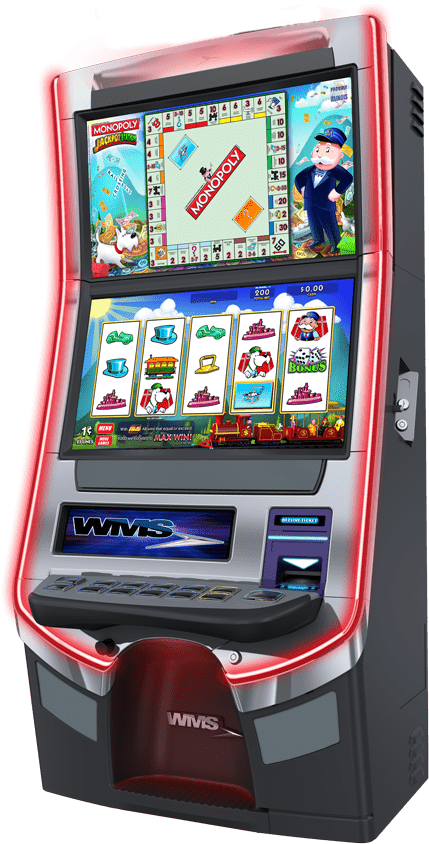
Armed with this knowledge, management may be more willing to increase prices. And for price-sensitive gamblers, reel slot machines may become something to avoid.
This article was originally published on The Conversation by Anthony Frederick Lucas. Read the original article here.