The two slots machines operate differently. The Class II slot machines are common in slots parlors. They are attached to Native American Casinos or horse racing tracks. Owing to improved tech tools, Class II slot machines have become more sophisticated. So much so that casual punters have a hard time telling them apart from Class III slot machines.
Slots has been a thing for eons. Over the decades, it has simply evolved and changed in form. But at its core, the gambling basics have remained unchanged. In the past decade or two, the industry has experienced many ‘tech upgrades’ that have increased the number of punters in the world. Today, you don’t have to take a trip down to Las Vegas. All you need is a steady internet connection an online casino you trust and you are set.Speaking of casinos, (land-based or online), there are two types of slot machines they feature; Class III and Class II. The two slots machines operate differently. The Class II slot machines are common in slots parlors. They are attached to Native American Casinos or horse racing tracks. Owing to improved tech tools, Class II slot machines have become more sophisticated. So much so that casual punters have a hard time telling them apart from Class III slot machines.
But you are in luck. In this piece, we shall scrape off the confusion by explaining the basics and answering some common questions related to Class II slot machines.
So, let’s get to it.
What Exactly Are Class II Slot Machines?
It’s simple. The Class II slot machines are designed to replicate Class III slot machines while remaining within the confines of the regulatory guidelines. The Class system is clearly stated and defined in the Indian Gaming Regulatory Act by the Federal Government. The Act defines all Class II games as bingo regardless of whether computer, electronic or any other tech gadgets are used with it and if it is played in the same room with bingo or any games similar to bingo.
The immediate consequence of this regulatory Act was that the high stake bingo games were legalized. Yes, the bingo games held in halls were super popular at some point. But with time, as developers sought to upgrade their gaming experience, they leaned towards a casino-like environment and experience. Though they managed to incorporate Class III casinos in some of their gaming options, they were met with a lot of resistance and legal issues.
It was during this time that Class II slot machines were designed. Since their inception, key players in the industry have been working around the clock to replicate Class III machine experience in Class II jurisdictions. Engineers have been contracted to build in-house systems while slot manufacturers were brought on board to create games that would run on the designed systems
How do they Work?
It’s true, aside from the LED bingo card which displays your card patterns for every spin; it’s really hard to differentiate the Class II from the Class III. The big part of the difference lies in how the game operates. So let’s peep under the hood and see how Class II slots machines are designed to meet legal requirements of being a bingo game.
First, there is usually a 20-millisecond window. Any person that presses the ‘Play’ button during this window enters into a common draw. For this draw to run there needs to be a minimum of two players (there is no maximum number). If there are only two players, one of them will get the winning pattern.
So here’s what happens when a video or slot poker is brought into the picture. Designers extrapolate odds of specific bingo games to video or slot games’ results that have similar odds. Usually, there are extra algorithmic processes that are in play which help to determine the outcomes but usually, the end results are similar – you pull the machine handle and the reels spin.
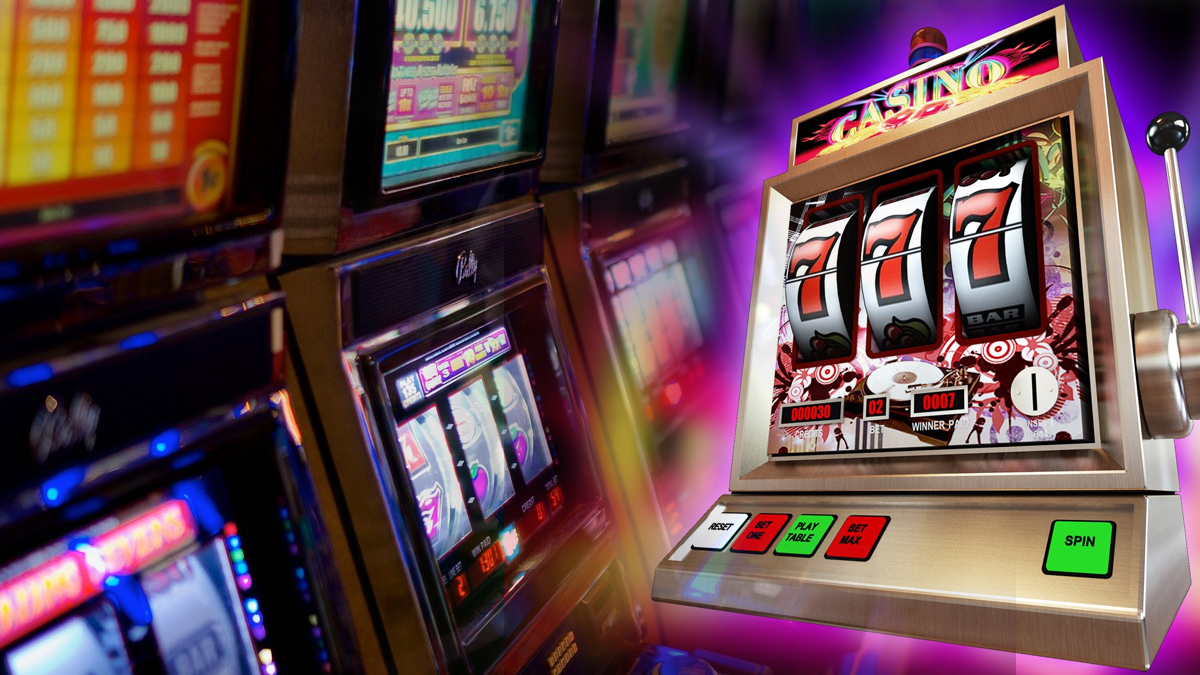
From the moment you pull the handle to the millisecond before they stop, you become one of the participants in a multiplayer bingo game. The results of the bingo game are ‘reported’ by the reels when they halt. If you are lucky, you’ll win some cash. So now if you think about it, you’ll have had a Las Vegas slot machine experience while in the background, the machine meets all the requirements which make it legal in Class II slot machine jurisdictions – areas where bingo is legal but RNG machines are not.
Now, most casinos that run the Class II slot machines claim that their odds are similar to those of Class III machines. This is how they explain it – it’s more like a scratch-off lottery card. But instead of scratching you’ll be pulling a handle.
And though this analogy is close to the real thing, it’s not quite accurate.
What do Class II Slots Look Like?
While they look extremely similar to Class III machines, the main way in determining if it is a Class II machine is to look on the display for a bingo table. It will look quite obvious and will indicate that the machine is using bingo logic rather than the typical RNG of a Class III machine.
Here’s an example below – notice that there is a bingo table located at the bottom right of the display.
Should You Play Class II Slot Games?
This is a really good question. And believe it or not, it’s pretty common. But despite this, its answer is not straight forward. But here’s something that will help you make that decision.
Gambling experts insist that Class II games are similar to lottery scratch tickets than Class II machines. You see, with lottery scratch tickets, the prize is determined before the printing of the tickets. Class II games may have shorter realization times but unfortunately, they aren’t random. The moment you pull the slot handle, the outcome of whether you have won or not and what prize you have won has already been made. The reels are only there to deliver the news.
Why do Casinos Prefer Class II Slot Machines?
Why is it that modern casinos seem to have a mix of Class II and Class III slot machines and games? And why is it that even with the mix, they are skewed towards class II games?
Well, first, the IGRA granted casinos self-regulating powers when it came to Class II games. However, with Class III games, they must be officially undergo rigorous testing through third parties and approved goverment organizations. This is to ensure that the randomness and reliability of the machine is deemed fair.
Second, casinos don’t have to pay taxes on the revenues generated from the Class II games. But on the Class III games, they are obligated to pay taxes.
Thirdly, the odds on winning in a Class II game are worse because you are put against a large pool of players to win instead of relying on RNG.
There you have it. Everything you need to make an informed decision. Hopefully, after reading this Class II and Class III slot machines don’t confuse you anymore. So with that go have a ‘happily ever after’ gambling experience.
Related Articles
All slot machines are not created equal, just as Canadian casinos do not all represent the same payout percentages on their slots. However, the inner mechanisms that make a slot machine tick are comparably orchestrated, in the same way that Canada’s gambling facilities all abide by the same regulatory framework.
Confused yet? You probably answered yes, and that’s exactly what most gambling venues would prefer. The less their patrons know about what makes slot machines tick, the more likely the casino is to make more money off of their clientele.
Most slots players walk onto the gaming floor with the predisposed notion that the games are based entirely on luck, which would effectively eliminate the need to wisely choose a particular casino or slot machine to play. That’s not exactly the case. In fact, we’re going to dispel a few myths here, and reveal just what goes on within the mechanizations of slot machines.
Who Determines the Payout Percentage?
There are three parties that weigh in on the payout percentage of any Canadian casino’s slot machines.
First, the respective provincial government sets a minimal payout standard. In Ontario, for example, the OLG requires a minimum 85% payout on all slot machines. All manufacturers and casinos in the region must maintain a percentage at or above that level.
Next is the game’s developer, who sets the percentage requested by the casino installing the device.
Third is the casino itself. While it’s not normal practice for a casino to adjust the payout percentage of its slot machines, it can be accomplished by altering the EPROM chip. However, a casino must request and receive permission to do so from regulators, with approved adjustments performed by a licensed slots technician under the direct supervision of a regulatory agent.
Which Slots Have Best Odds
Can Casinos Control a Slot’s Precise Payouts?
No. A random number generator (RNG) decides with each spin of the reels what will occur, and how much will be paid out. Casinos can only choose the long-term payout percentage, but cannot regulate when the payouts will occur. Thus there is no better time (day or night) to play slot machines, and no predicting when a progressive jackpot will strike.
The actual weekly and monthly payout percentages may be higher or lower than a machine is set to pay, but in the long-term, the exact chosen percentage will be achieved. The RNG integrates genuine unpredictability into every slot machine. For this reason, a progressive could strike only once in a 10 year span, or three times in a single week.
Do Payout Percentages Apply to Individual or Collective Slots?
Best Slot Machine Odds
Every slot machine in a casino must be individually set to comply with the region’s payout standard. You will not find one slot machine set to pay 70%, with its neighbor set at 105% to offset the difference. All slots must meet the minimum 85% or higher payout percentages.
What Slot Machines have the Highest Payouts?
Slots that require higher coin denominations generally have higher payouts, even compared to cheaper slots with a max-coin multiplier.

For example, a $0.05 slot might take up to 3 coins, paying 1,000x for a jackpot on a 1-coin bet, 2,000 for a 2-coing bet, and 4,000x for a max 3-coin bet. On this type of machine, the 3-coin, $0.15 bet has the best payout percentage. However, a $1 slot machine that requires a minimum $1 bet per coin is likely to have a higher payout percentage for a single-coin bet than wagering the max 3 coins on a nickel slot.
What about Tribal Casinos?
All casinos in Canada, whether run by their respective provincial government or by a tribal organization, must abide by the same slot machine laws of their province, and that of the national standard. There’s no reason to expect the slots at a tribal casino or Canadian-run casino to be any higher or lower than the next.
Best Canadian Friendly Brand w/ Easy Deposits
Royal Vegas Canada has been our editor’s #1 pick for three consecutive years ! Great compatibility of course (iphones, mobiles and tablets) but also an exciting range of games and promotions. Excellent support teams and quick cashouts… What else to ask for ?